Two women raised on farms in this corner of southeast Nebraska, born 55 years apart, ended up pointed at the same stretch of river.
The first was Elzada Clover, born in 1896 in Peru, who in 1938 became one of the first two women known to successfully run the Colorado River through the Grand Canyon and the first botanist to catalog what grew along it.
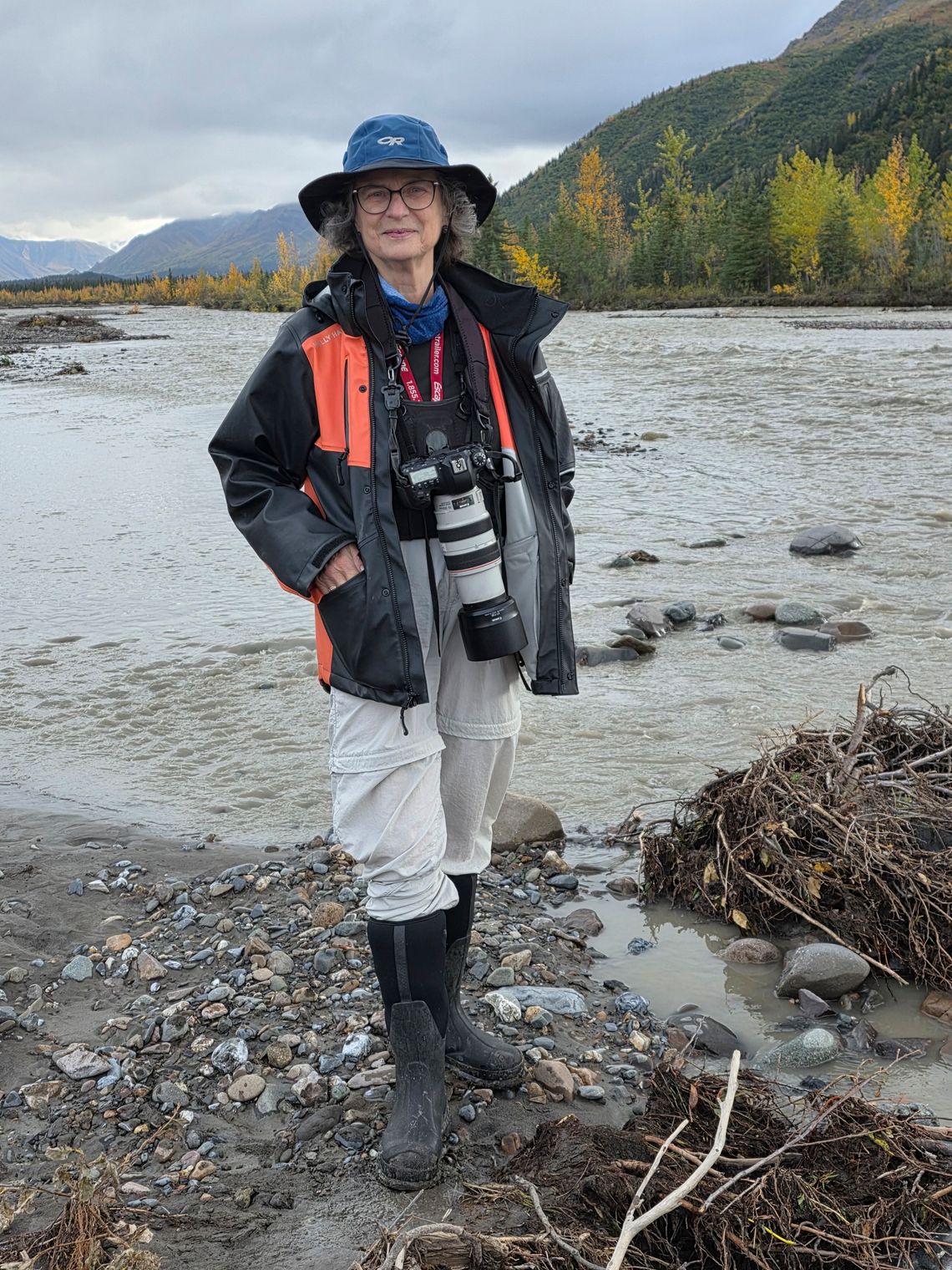
The second is Pamela Bergmann, 74, who grew up on a farm southeast of Auburn. She talked her way into a summer to Sweden at 20 and hasn’t stopped traveling since. On Oct. 3 she will push off on a 16-day raft trip through the canyon, carrying a handmade banner with Clover's name on it.
Bergmann went through Auburn schools and says she never heard Clover mentioned. She learned about her two years ago, from a friend in Arizona.
"A lot of women doing notable things just kind of slip through history," she said.
The botanist nobody mentioned
Elzada Urseba Clover was the seventh of nine children born to Sarah and Maynard Clover on a farm that Melissa L. Sevigny, in her 2023 book "Brave the Wild River," places it in a corner of Nebraska just west of the Missouri River. A death notice in the Dec. 5, 1980 issue of Ann Arbor Daily News lists Auburn as her birthplace. Clover finished a teacher training course at the normal school in Peru (now Peru State College), played basketball, belonged to the dramatic society and served as vice president of the science club, and took a high school teaching job to earn college tuition.
She went on to a doctorate at the University of Michigan and a career studying cacti after a move to Texas from Peru, Nebraska with her father peaked her interest in cacti and succulents. In the summer of 1938 she and graduate student Lois Jotter joined river runner Norman Nevills for a botanical survey of the Colorado, riding wooden boats Nevills and his father had built and never tested on that water.
Newspapers of the day covered the women as a stunt. Bergmann said Clover spent the trip trying to steer the conversation back to science.
"She kept saying, we're here to do this as botanists," Bergmann said.
They identified plants no one had recorded in the canyon before. Their survey is now treated as a baseline for measuring what Glen Canyon Dam in Northern Arizona did to the canyon's flora.
The Glen Canyon Dam, according the U.S. Bureau of Reclamation is a 710 foot dam on the Colorado River that provides water and hydroelectric power for much of the southwest and created Lake Powell.
A footnote on page 7
The connection came through Nebraska, as most of Bergmann's do.
She has volunteered at the Audubon center at Rowe Sanctuary near Gibbon, Neb. during crane season since 2012, served seven years on its stewardship board and now sits on the Audubon Great Plains board. A fellow board member from Kearney, a biology teacher who guided Grand Canyon trips for about 30 years, mentioned that some outfitters run the river in October. Bergmann, an Alaskan who had written off the canyon as a summer furnace, started paying attention.
Around the same time, a friend in Arizona picked up Sevigny's book. On page 7 she hit a line about a botanist born in Auburn, Nebraska. She mailed the book north.
"I read the story, and I'm just like, wow," Bergmann said. "This is amazing."
The road out of Nemaha County
Bergmann's own route was not much shorter.
Her parents were Julius Bergmann Jr. and Nadene Bergmann. Her father contracted polio in 1951, while her mother was pregnant with her, and spent roughly a year in the hospital, much of it at the veterans hospital in Lincoln. He lost the use of his arms and walked with a limp. He also, his daughter said, was relentlessly curious, and Sunday afternoons meant loading the family in the car and taking whichever road looked most mysterious.
The American Legion Auxiliary sent her to Cornhusker Girls State in 1968. She still belongs to the group. At Northwest Missouri State University in Maryville she was picked as an exchange student to Sweden, spent two months with host families and talked her parents into a third, giving up a summer of waiting tables at Arbor Manor, detasseling corn, building kitchen cabinets at Wood Carve and cleaning the Auburn schools.
"That really kind of opened Pandora's box for me," she said.
After earning a degree in secondary education she taught at a Bureau of Indian Affairs school at Fort Wingate, New Mexico, on the Navajo Nation. After later deciding teaching was not her calling, Bergmann took a fellowship to Arizona State University. Seven years of socioeconomic research on Western energy projects followed, then San Francisco, then Seattle, then a hydroelectric project in Alaska that would have been the largest dam in North America. The governor canceled it in 1986 but Bergmann stayed in Alaska.
She was hired on with the Interior Department studying how offshore oil and gas activity in the Arctic Ocean would affect bowhead whaling, sealing and polar bear hunting. "I'm being paid for this," she remembers thinking.
She retired in 2014 as the department's regional environmental officer for Alaska, one of eight in the country and, she said, one of two women. She led development of the wildlife protection guidelines still used to decide how birds, sea otters and marine mammals are handled after an oil spill, and pushed the federal response system to protect historic properties too, an idea she said nobody had raised before. She was Interior's on-scene coordinator for the Exxon Valdez spill.
She has been to more than 60 countries. She and her spouse John Duffy have also helped Hustai National Park in Mongolia, home to roughly 425 of the world's thousand or so Przewalski's horses, a species pulled back from extinction the way whooping cranes were. She got to name a foal there. She called him Julius after her father.
A banner at every camp
The October trip, booked through Arizona Raft Adventures, runs the full canyon with about 29 people in the group. Bergmann sent the outfitter's customary introduce-yourself note ahead of time and used it to tell the group about Elzada Clover.
The banner is a 4-H project at heart. She plans to hem a pocket at the top for a dowel and run coat hanger wire down the side so it stands out from the pole, and she intends to fly it at camp every night on the river.
“I will not be out chasing rapids. I am a longtime sea kayaker but not a swimmer,” Bergmann said drowning ranks low on her list of preferred exits. "If Elzada did it in this wooden boat that had never gone down the river, I can do it in a raft."
Back home, she has been working on the other half of the mission. She gave a hardcover copy of "Brave the Wild River" to Maxine Schatz at the Nemaha Valley Museum, and the Auburn Memorial Library has a copy, too. She wants a small display somewhere students will see it, and high school media specialist Julie Lambert is working on this with Bergmann in the future. The display will include a short write-up on the woman who grew up down the road.
She will also meet Sevigny in Flagstaff before the launch.
"We both grew up on farms outside of Auburn, and that was really important to both of us," Bergmann said. "But after school, we kind of took off and started exploring the wider world."