Self-care is often misunderstood as indulgence, but true self-care can be uncomfortable and requires discipline, according to Dr. Ana Damme, Ph.D., LP, BCBA of Hometown Behavioral Health in Auburn.
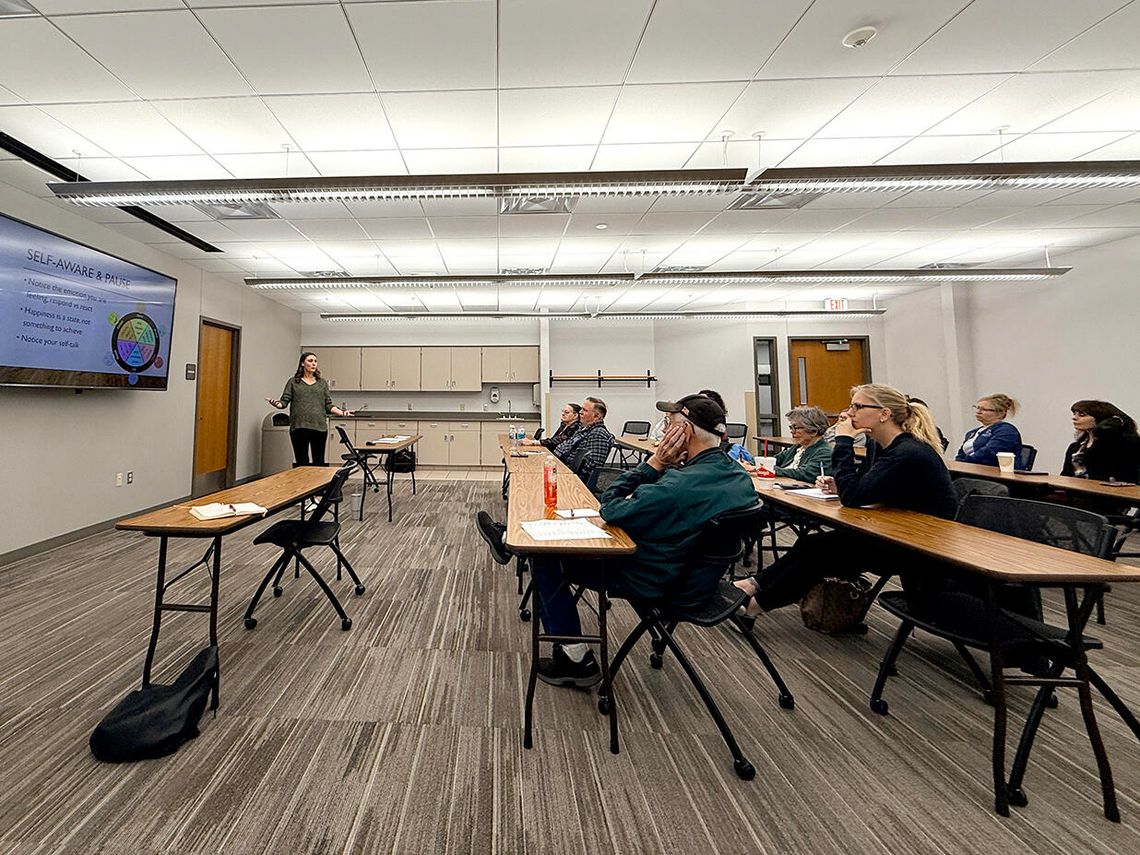
Speaking during a recent presentation at Nemaha County Hospital, Damme told attendees that caring for oneself should be approached the same way people care for others — by consistently meeting basic needs, even when it takes effort.
“Self-care is more than just getting a pedicure or grabbing a coffee,” Damme said. “It’s doing the things that are actually good for you, even when you don’t feel like doing them.”
Damme said the concept becomes clearer when focusing on the word “care” itself: providing attention, meeting needs and preventing harm. Just as parents push children to brush their teeth or go to bed on time, adults must hold themselves accountable for habits that support long-term well-being.
“You struggle through caring because it’s what’s good for you,” she said.
Daily habits matter
Damme emphasized that daily habits — including sleep, movement and self-awareness — play a critical role in mental and physical health.
Even simple activity can make a difference.
“Moving your body doesn’t have to be a rigorous workout,” she said. “It can be something as simple as choosing to walk more during the day.”
She compared self-care to maintaining a vehicle.
“If you don’t change the oil in your car, you wouldn’t expect it to run well,” Damme said. “Your body works the same way.”
Sleep often overlooked
Sleep is one of the most overlooked components of health, Damme said.
Chronic sleep deprivation has been linked to anxiety, depression, irritability, reduced focus and mood instability. Adults generally need seven to nine hours of sleep each night.
“Sleep is not a luxury,” she said.
Damme also cautioned that consistently sleeping far beyond recommended amounts can negatively affect health.
Improving “sleep hygiene” — habits that support better sleep — can make a significant difference. Strategies include limiting long daytime naps, maintaining consistent sleep schedules and avoiding activities such as watching television or working in bed.
“Our bodies develop conditioned responses,” Damme said. “If you spend all day in bed watching TV or doing stressful work, your body stops associating that space with sleep.”
Understanding emotions
Emotional awareness is another key component of mental well-being, Damme said.
Many people try to avoid uncomfortable emotions, but feelings such as anger, fear and sadness serve important purposes.
“The majority of emotions we experience are uncomfortable,” she said. “That’s normal.”
Learning to identify emotions and understand their causes can help people regulate reactions and make healthier decisions.
Changing internal dialogue
Damme also highlighted the role of self-talk — the internal dialogue people have with themselves.
Negative or automatic thoughts can shape emotions and behavior. For example, someone who thinks “I’m terrible at this” may feel discouraged and give up, while reframing the thought as “I’m still learning” can encourage persistence.
“We often believe every thought our brain produces,” Damme said. “But not every thought is accurate or helpful.”
Social media concerns
Damme also addressed the impact of social media and technology on mental health.
Research increasingly links heavy social media use with higher levels of anxiety and depression, particularly among young people. Teenagers may spend up to eight hours a day on technology and social platforms.
While she did not recommend eliminating social media entirely, Damme encouraged people to set boundaries around its use.
“I just want people to be aware of how technology can start controlling their behavior,” she said.
Online interactions, she added, often lack the depth and connection found in face-to-face relationships.
Consistency is key
Ultimately, improving mental health often comes down to consistent habits rather than dramatic changes, Damme said.
Healthy routines, positive self-talk and intentional limits on technology can help people maintain balance and resilience over time.
“Consistently taking care of yourself is far more important than occasional bursts of effort,” she said. “You have to start treating yourself the way you would treat someone you care about.”
Ad

Dr. Ana Damme Encourages Practical Self-Care
PLEASE LOG IN FOR PREMIUM CONTENT. Our website requires visitors to log in to view the best local news.
Not yet a subscriber? Subscribe today!