When disaster strikes, much of the work happens behind the scenes.
From tracking expenses to coordinating logistics and securing outside resources, those details can determine whether a community recovers smoothly — or struggles long after the sirens stop.
That’s where the Southeast Nebraska Incident Management Assistance Team, or SEN-IMAT, comes in.
The 14-county regional team —Cass, Fillmore, Gage, Jefferson, Johnson, Lancaster, Nemaha, Otoe, Pawnee, Richardson, Saline, Seward, Thayer, and York recently received national recognition from the Incident Management Team Association. Only one team nationwide receives the award each year.
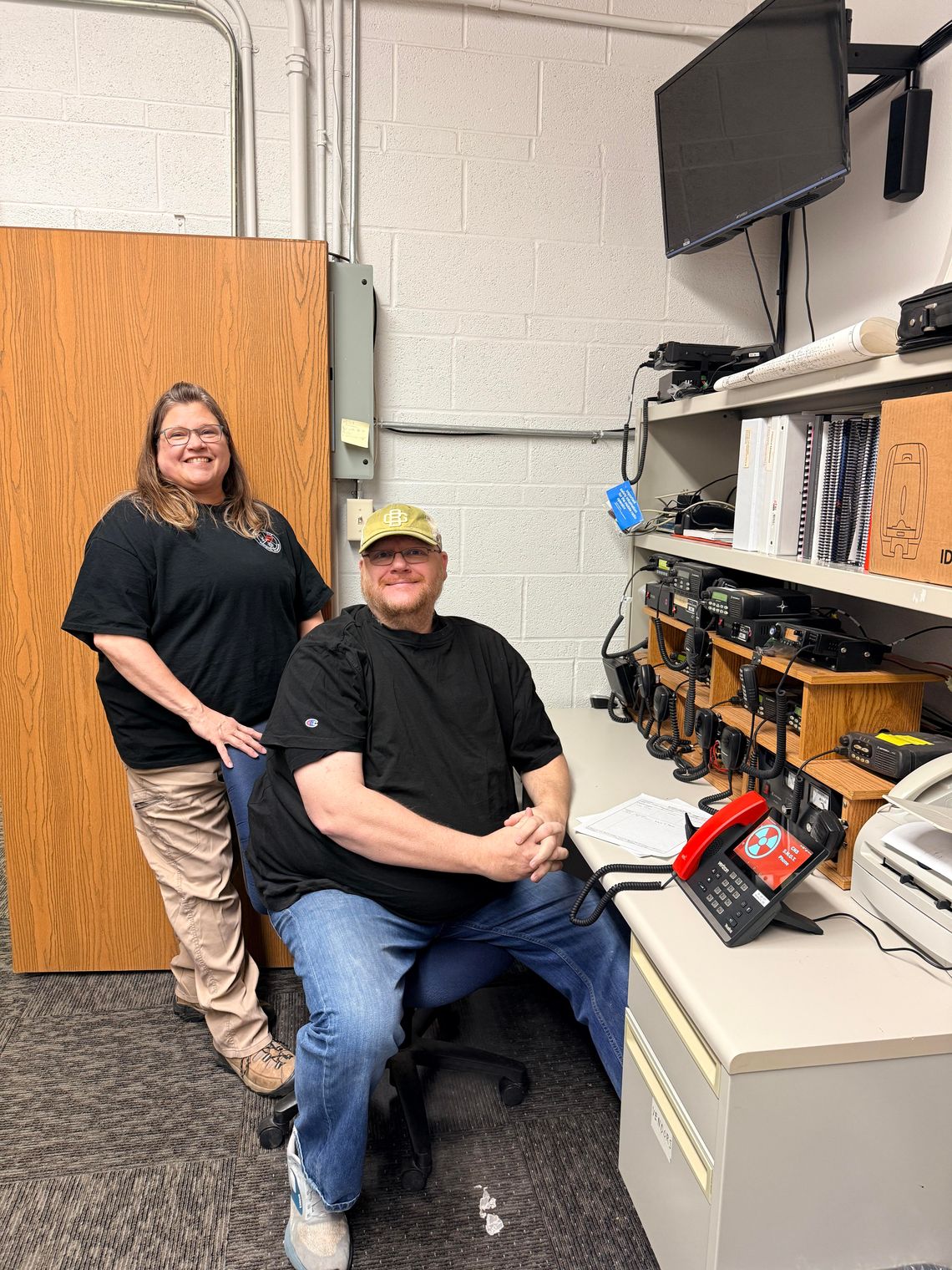
Key players in this team are local directors, Nemaha County Emergency Management Director Renee Critser, and Johnson County Emergency Management Director Megan Buckley.
The award has been presented for four years. In 2024, it went to the State of New Jersey’s incident management team, which operates under that state’s patrol division and draws from multiple state agencies.
Nebraska’s Southeast Regional IMAT is the first regional Type 3 All-Hazards team recognized in the state and remains the only state-recognized and now nationally recognized team. Members of the regional team have also helped the state build its own incident management structure.
“We’ve kinda become the model in the state because we were the first to create this framework,” Critser said.
An “all-hazards” team means just that — capable of responding to anything from wildfires and flooding to incidents involving Nebraska Public Power District’s Cooper Nuclear Station.
IMAT teams handle finance, logistics, planning and operations. They also manage critical but often overlooked details, such as documenting volunteer hours, tracking equipment usage and coordinating food and shelter resources.
“It’s like when you have a huge task and you’re the only one doing it, and you wish you had 15 other people helping,” Critser said. “That’s what we bring.”
Megan Buckley added that this group is the first line of defense, “These are the group we call first. We train together, we work together - its a fantastic group of people willing to step in.”
The team can respond to large-scale disasters or smaller incidents requiring only a few additional personnel.
Critser pointed to the Highway 136 grass fire last year as an example. While she was attending training in Kansas City, she began coordinating assistance as soon as she learned of the fire. Within hours, emergency managers from surrounding counties were on their way to help. Buckley was able to support from afar with other agencies being notified and on the ground.
As crews battled the fire, others began documenting costs — something the public rarely sees.
“It might look like just a grass fire,” Critser said, “but when you start calculating fire apparatus, volunteer hours, farm equipment and other resources, it adds up.”
By the time totals were compiled, related costs had reached roughly $180,000. Proper documentation ensured the county would meet thresholds if a disaster declaration became necessary.
That behind-the-scenes coordination is one of IMAT’s most critical roles.
The Southeast Regional Governance Board, made up of emergency managers from the 14 counties, operates under a memorandum of understanding to support one another during disasters. The structure ensures that if one county becomes overwhelmed, others can step in immediately.
“It’s a backup system,” Critser said. “If I can’t handle it alone, I have trained people I can call who can.”
The team’s development began years ago. When Critser started in 2011, several counties were attempting to build a similar framework. Establishing the team required additional training, credentialing and coordination — often on top of already demanding jobs.
The need for strong regional and local response systems may grow, she said, particularly as federal resources evolve and communities take on more responsibility for disaster management.
Beyond emergency response, IMAT also works with local governments and businesses on continuity planning — helping them determine what they would need to resume operations after a tornado, flood or other disaster.
Insurance, Critser said, is only part of the equation.
“Do you need temporary space? Internet? Equipment?” she said. “Those are the things people don’t always think about.”
Critser and Buckley both emphasized that emergency management’s role is not to take control, but to support.
“We’re here to help you get the resources you need,” Critser said. “If we don’t have them locally, we go to the region. If the region doesn’t have them, we go to the state.”
But following the proper process is critical, particularly when public funds are involved.
“If it doesn’t go up correctly and come back correctly, you could be on the financial end of it,” she said.
For Nemaha, Johnson and Pawnee County and its neighboring communities, the national recognition affirms years of work building a system designed to respond when it matters most.
Ad

Southeast Nebraska Incident Management Team Earns National Recognition
PLEASE LOG IN FOR PREMIUM CONTENT. Our website requires visitors to log in to view the best local news.
Not yet a subscriber? Subscribe today!