A University of Nebraska-Lincoln agricultural economist recommended agricultural land leases be in writing.
“It protects you, your heirs and the other parties involved,” noted Anastasia Meyer, presenting 2026 lease arrangement trends.
Who Is Responsible For Maintaining Irrigation System as Part of Cash Lease: Landlord and tenant, 47 percent; tenant, 29 percent; landlord, 21 percent and other, 3 percent.
Discount on Cash Rent Per Acre When Tenant Owns Pivot For Irrigation System: 52 percent in the $26 to $50 range, Meyer noted it is typically close to $50; 37 percent in the $10 to $25 range; 9 percent $51 or more and 2 percent none.
Real Estate Feature Contributing the Most Value to Hunting Leases: Vegetative cover, 37 percent; proximity to water, 25 percent; topography, 19 percent; conservation practices, 17 percent and other, 2 percent.
Average percent distribution for hunting lease comparison for wild game, Southeast District: Antelope or deer, 54, primarily deer; turkey, 19; pheasants or quail, 15; waterfowl, 8 and other, 4.
Average annual income for leasing hunting rights in Nebraska: Up to $2,499, 62 percent; $2,500 to $4,999, 29 percent; $5,000 to $9,999, 8 percent and $10,000 and up, 1 percent.
Crop Share Arrangements
Landlords who are engaged typically receive a percentage of the actual crop yield as payment for leasing the property to the tenant. The landowner usually shares input and production costs of raising the crop, Meyer noted.
They are a fair way to rent if the expenses are split property. Usually it requires both parties to market grain. Both share in the risk and the reward, she related.
“You need to examine expenses. You need to be willing to communicate with each other,” the economist continued.
Typical nonirrigated shares in Southeast Nebraska are 40:60, with the smaller amount going to the landowner. Meyer noted it is 50:50 on highly productive soil.
Pasture and Grazing Land Leases
She said it depends where you are in Nebraska, but they are typically five months, May to October or June to November. The leases end annually, and while termination notices are not necessary Meyer believes it is still good to communicate with the other party.
Lease Provisions
General: Need starting and ending date, timing of termination, holdover clauses, negotiating for the next term and when payment is due.
Fertility: The economist noted if you have a tenant 20 years typically they are treating the property well. Economic times are becoming rougher in farming, she said.
“It makes folks treat the land as if is their own,” Meyer indicated.
Factors are phosphorus, mining of soil and lime.
Soil Health and Environmental Concerns: Those include fixing excessive erosion, non-crop acres, tillage vs. no till consideration, and organic vs. non-organic production.
“Provisions need to make sense,” she stated.
Pastures: The economist noted there is a need to determine who is responsible for each aspect. Those encompass who is taking care of the fencing, hunting rights and the Nebraska Recreational Use Law. You also need to consider what will happen in the event of the three most prominent disasters, which are fire, hail or drought.
“You are not liable if you do not receive payment,” she indicated.
Additional items: Those are corn stalks use, which Meyer called the most forgotten aspect; manure application and irrigation equipment.
“If you have a good tenant who has been with you for years, typically you don’t need these provisions,” Meyer responded.
What To Communicate
Tenant: Force yourself to share information with the landlord, even for cash leases. Timely crop updates including moisture conditions, and weed, disease or insect pressures.
Landlord: Overall management of the farm, including if you have visions or goals. Specifically weed and erosion control, and non-crop acre management expectations.
Leasing Considerations
How is the tenant helping you by maintaining terraces and waterways, fences and the irrigation system as well as controlling noxious weeds.
“Perhaps they are treating that land or treating you well,” Meyer concluded.
Farmland succession and transition will be explored in a separate article next week.
Ad

Include Various Contingencies In Agricultural Land Leases
The following is among four articles from a presentation Tuesday afternoon, Dec. 9 at the Nebraska Extension-Nemaha County office in Auburn.
The Southeast District encompasses Johnson and Nemaha counties; as well as: Clay, Fillmore, Gage, Jefferson, Nuckolls, Otoe, Pawnee, Richardson, Saline and Thayer counties.
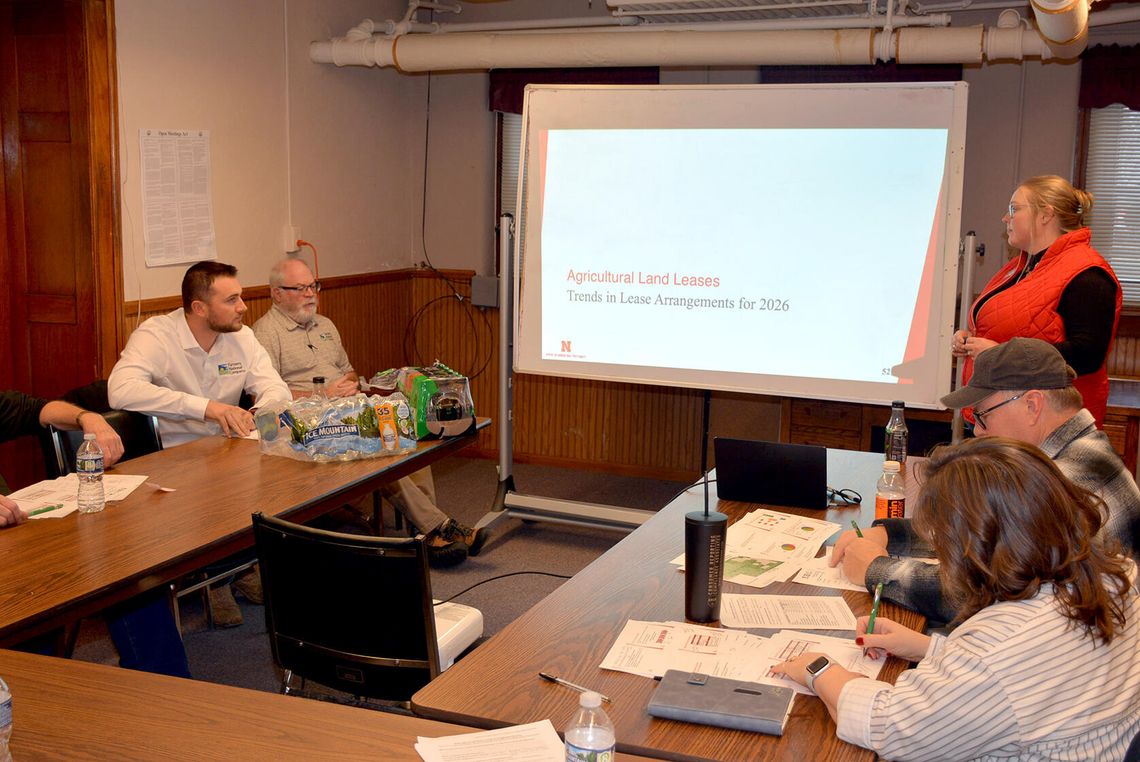
photo by David Swanson
PLEASE LOG IN FOR PREMIUM CONTENT. Our website requires visitors to log in to view the best local news.
Not yet a subscriber? Subscribe today!